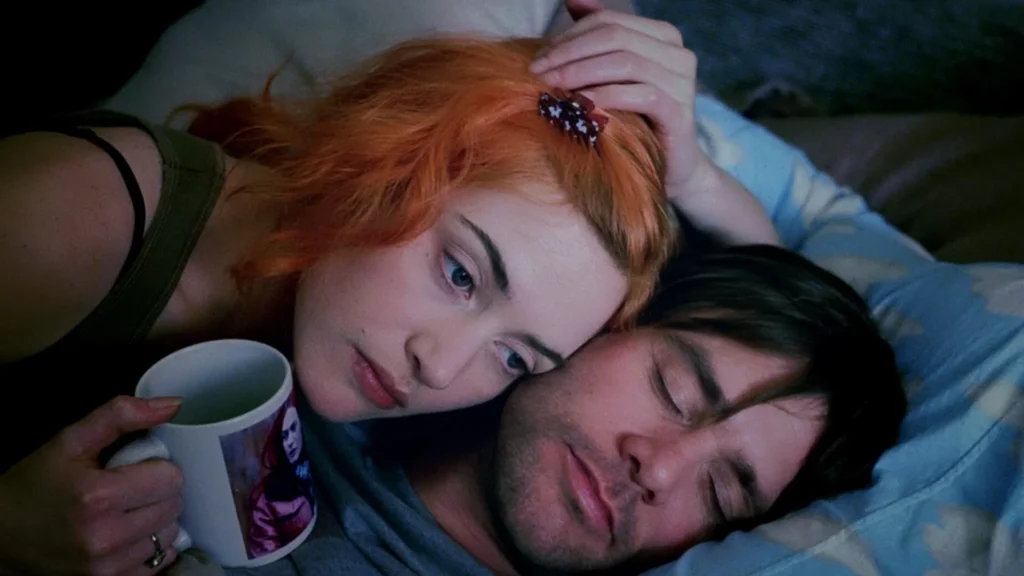
Jon Brion’s original score for Eternal Sunshine of the Spotless Mind (2004) remains one of the most distinctive and emotionally resonant soundtracks of the 21st century. Blending fragile piano lines, vintage optical keyboard textures, tape loops, and muted strings, Brion created a soundscape that captures the fragility, confusion, and wonder of memory and love.
Together with another soundtrack of 2004, David O. Russell’s I Heart Huckabees, the Eternal Sunshine of the Spotless Mind score marked Jon Brion’s most successful year as a composer.
Listen
Experience the Eternal Sunshine of the Spotless Mind soundtrack across platforms.
Original theme studio recording
The official soundtrack album is a compilation, featuring Brion’s score alongside tracks from artists such as Beck (covering “Everybody’s Gotta Learn Sometime”), E.L.O., The Polyphonic Spree, The Willowz, and Don Nelson.
Piano solo arrangement (played by a fan)
A sensitive solo interpretation that highlights the melody’s simplicity and unresolved beauty.
Play it yourself
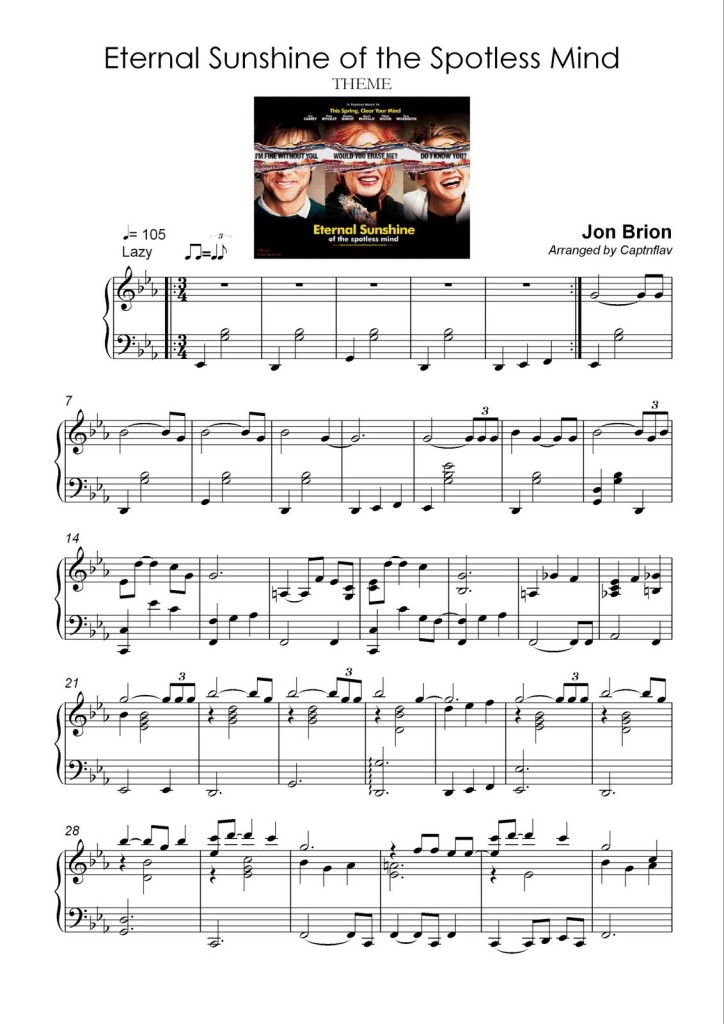
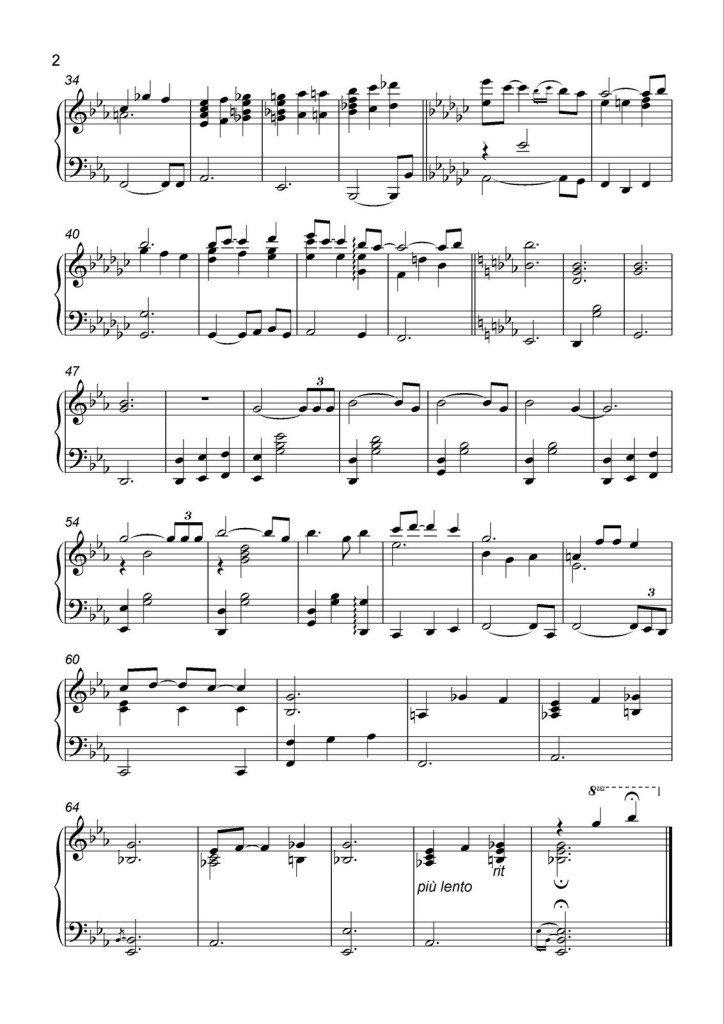
Sheet music
Transcribed from the original soundtrack theme.
Piano tutorial
Learn the Eternal Sunshine of the Spotless Mind theme step by step.
About this soundtrack by Jon Brion
Jon Brion’s score for Eternal Sunshine showcases his philosophy of film composition:
“I consider myself a songwriter, but I consider myself a songwriter in a very, extremely old-fashioned sense. Just the melody and chord changes have to evoke a sense of song, even if lyrics aren’t there.”
Director Michel Gondry praised Brion’s music as both “populist” and “specific and original,” noting that Brion shared the same dissatisfaction with the world as the director and screenwriter Charlie Kaufman.
The score perfectly embodies what filmmaker David O. Russell observed about Brion’s unique gift:
“So many composers I know just throw their hands up and say, you know what? You can’t have all these things. You can’t be quixotic and wistful and joyous. It can’t be all those things.”
Vintage equipment to create emotion
One of the soundtrack’s most distinctive elements came from Brion’s use of rare 1970s keyboards — the Optigan (Optical Organ) and Chilton TalentMaker — which played back pre-recorded samples from optical discs, creating a grainy, nostalgic quality.
Director Michel Gondry had a personal connection to this choice:
“It’s funny because you were talking about my grandfather inventing that keyboard… when I went to see Jon he had [The Talentmaker]. And I hadn’t heard or seen one in 30 years. So when you hear this very sad guitar that we use a lot [in the film] that’s [The Talentmaker]. So you had the nostalgia of my grandfather’s shop.”
This vintage equipment gave tracks like “Phone Call” their dreamlike, memory-worn texture, perfectly matching the film’s themes of fading recollections.
Jon Brion’s process
Brion’s approach to scoring was uniquely collaborative and improvisational. Working with director Michel Gondry, he described his method:
“I like to just be in the room with the director, watching the movie together, and I play to it like somebody would play to a silent film. That’s the quickest, easiest way to describe the process.”
Analysis & meaning of the soundtrack
“Theme”: The opening
The instrumental score provided on the official CD release is notably short, lasting only about twenty minutes. The track “Theme” is the longest instrumental piece at 2’15”.
“The opening theme is an astonishing piece of work. The piano, the arrangement and mix just sweeps me up in the air. It’s an emotional tune, with highs and lows. And it has a whimsical quality at times. But most of all, it captures the strange, beautiful, devastating plight of Joel and Clementine.”
(Filmmaker Gary Lundgren on his blog)
“Phone Call”: New love
“‘Phone Call’ is a dreamy sequence representing the excitement and hope associated with a new romance and the strong feelings that take hold as each person lets their guard down.”
(Tyler Pavlas expressed on his Medium)
Hip-hop artist Jay Electronica was deeply influenced by this track:
“There’s a scene when Jim Carrey’s character has just met Clementine… But the music you heard — do-do-do-do-do-do-do — didn’t make you feel so good. It created such a good contrast. I just wanted to do something that felt like that.”
Technical breakdown
The beloved “Phone Call” theme layers two arpeggiated guitar tracks playing different chords: Guitar 1 plays a Db arpeggio while Guitar 2 plays Gb to Ab arpeggios, creating a shimmering, emotionally complex texture.
These weren’t standard guitars but vintage Optigan and TalentMaker samples — 1970s optical disc keyboards that created the grainy, worn quality that makes the score feel like a memory itself.
“Peer Pressure”: Childhood shame
“On ‘Peer Pressure’, Brion is tasked with capturing nostalgia and shame, in a scene where Joel retreats with Clementine to a repressed memory from childhood.”
(Tyler Pavlas expressed on his Medium)
“Bookstore”: Reversed reality
Brion created a surreal cue by reversing and speeding up the “Phone Call” guitar sample, raising it three semitones to E Major, and thus perfectly capturing the dreamlike disorientation of memories collapsing.
“Everybody’s Got to Learn Sometime” (with Beck)
“At the end, when Brion and Beck’s rendition of ‘Everybody’s Got To Learn Sometime’ plays us into the credits, he’s got us just as emotional as the main characters.” (Tyler Pavlas)
Awards
🏆 The Eternal Sunnshine of the Spotless Mind soundtrack earned a Grammy nomination for Best Score Soundtrack Album and continues to influence composers and filmmakers two decades later.
Cultucal impact & legacy
Critical recognition
Critics have consistently praised the score’s unique approach. Film critic Roger Ebert’s site noted:
“In films like Punch-Drunk Love and Eternal Sunshine of the Spotless Mind, Brion’s music evokes the lush soundscape of a Hollywood musical. His is a score without libretto; if the characters in those films were suddenly to break into song, not a beat of Brion’s scoring would feel out of place.”
Influence on hip-hop and indie music
The Eternal Sunshine soundtrack became a touchstone for multiple genres. It directly influenced indie, dreampop bands and hip-hop artists, with tracks being sampled in several songs.
Most notably, Brion’s work on this soundtrack led directly to his collaboration with Kanye West on Late Registration (2005), where he provided orchestral arrangements and co-production. Brion explained:
“Eternal Sunshine is absolutely [mixing different fidelities of sound]. My live gigs had a lot of that… So I always wanted to do a hip-hop record and nobody asked.”