When Elliott Smith signed to a major label, critics feared his hushed, “lo-fi” bedroom folk would be crushed under big-budget production. Instead, he met Jon Brion. Together, they didn’t just add more sound; they added more color. Brion took Smith’s fragile, haunting melodies and placed them inside a Technicolor orchestral world, creating some of the most beautiful and ambitious music of the late ’90s.
“He’s plugged into some other part of the universe.”
Jon Brion on the experience of playing with Elliott
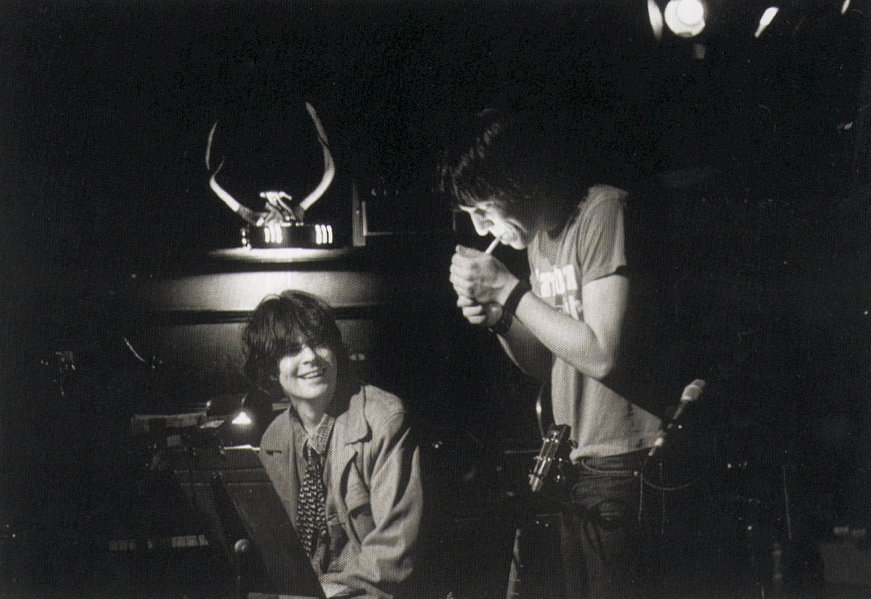
Key albums
- XO (1998) – The Wizard of Oz moment: going from mono to color
- Figure 8 (2000) – Smith’s LA record and his creative peak
- From a Basement on the Hill (2004, posthumous) – The unfinished collaboration that ended up in other producers’ hands
Essential tracks
- “Waltz #1” – Brion’s Chamberlin meets Smith’s delicacy
- “Bottle Up and Explode!” – When Smith went for bigger arrangements
- “Independence Day” – Perfect marriage of intimacy and production
- “Happiness” – Brion on backing vocals, pure Brian Wilson sunshine
- “Everything Means Nothing to Me” – The Jon Brion Show performance that made Brion cry
Who was Elliott Smith?
To really get into the world of Elliott Smith, watch the documentary “Heaven Adores You.”
Or listen to Jon Brion speaking (highly!) of Elliott Smith:
In another rare interview segment, Brion spoke about Smith’s staggering talent, noting how Elliott could walk into a room, pick up any instrument, and play it better than the specialists. Their bond was one of mutual respect — two perfectionists pushing each other toward something sublime.
How Elliott Smith and Jon Brion first connected
Smith’s early career was rooted in fragile acoustic intimacy and introspection. He spent most of the ’90s recording in basements and bedrooms. His lo-fi classics Either/Or and Roman Candle were made with minimal equipment and maximum heart. Then came the Oscar nomination for “Miss Misery” from Good Will Hunting, and suddenly Smith had a major label deal with DreamWorks and a real studio budget.
This is when Smith found himself moving in circles that overlapped with Brion’s Los Angeles milieu and the Largo scene, where Brion’s legendary weekend residencies blurred lines between audience and collaborator.
Driven by a mutual obsession with The Beatles and the capabilities of vintage gear like the Chamberlin, Elliott Smith and Jon Brion recorded together in the early 2000s with the intention of creating new material — a chance to marry Smith’s incisive writing with Brion’s orchestral adventurousness. According to accounts of these sessions, the work was promising but ultimately never completed.
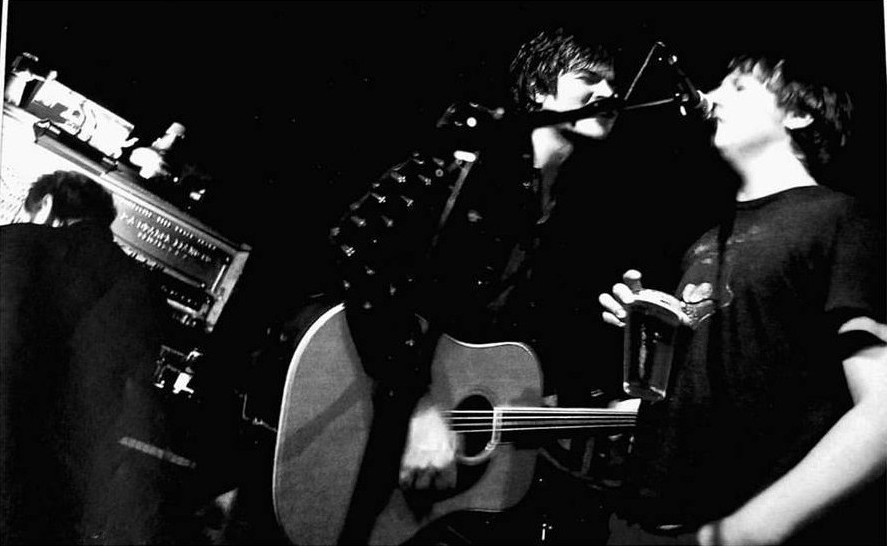
This story is complicated by personal struggles and shifting artistic priorities on Smith’s side — factors that led him to scrap the sessions and eventually move on to other producers for his next proper studio album.
XO (1998): The Wizard of Oz goes to color
When XO came out on August 25, 1998, it shocked people who thought they knew Elliott Smith. This wasn’t the guy-with-acoustic-guitar they expected. This was full-band arrangements, strings, horns, Beatlesque production flourishes — and it was gorgeous.
Brion’s contributions were subtle but crucial. His Chamberlin and vibraphone appear on “Waltz #1,” “Bottle Up and Explode!,” and “Everybody Cares, Everybody Understands.” The effect, as one critic put it, was “like The Wizard of Oz switching to color.”
But here’s what made the collaboration work: Brion never overwhelmed Smith’s songs. He understood that Smith’s vulnerability was the point. Double-tracked vocals (Smith’s signature technique), delicate arrangements, space for the songs to breathe — everything served the emotional core.
Producer Larry Crane, who owned Jackpot Recording where early XO sessions took place, later pushed back against the “tortured artist” narrative:
“I’ve got photos of us playing basketball and riding skateboards in the parking lot. People listen to his music, and they get this idea of Elliott as this sad-sack dude and all that crap. He was a well-rounded human who had a lot of talent.”
At the time of XO, as Crane said, “it was like — future’s bright. This is going to be awesome. Elliott was at the top of his game before the demons had entered.”
Figure 8 (2000): Smith’s LA record and his Brian Wilson moment
After XO‘s success, Smith moved to Los Angeles in 1999 and began work on what would be his final completed album. Figure 8 is unmistakably an LA record — not in sound, but in spirit. Smith workshopped the songs at Brion’s legendary Friday night residency at Largo in West Hollywood and at bars in Silver Lake.
The album title came from Smith’s fascination with figure skating:
“I liked the idea of a self-contained, endless pursuit of perfection. But I have a problem with perfection. I don’t think perfection is very artful. But there’s something I liked about the image of a skater going in a twisted circle that doesn’t have any real endpoint.”
While Brion didn’t produce Figure 8 (Tom Rothrock and Rob Schnapf returned for that), his influence is all over the sessions. He contributed backing vocals to “Happiness” — one of the album’s sunniest, most Brian Wilson-like moments. And Smith recorded parts of the album at Abbey Road Studios in London, the same place Brion had taken Fiona Apple for string arrangements.
Figure 8 was Smith’s most ambitious work: lush orchestration, complex arrangements, songs that moved from whisper-quiet to full-band dynamism. Critics called it “muscular chamber-pop” and “brisk and busy, upbeat and confident.” Rolling Stone would later rank it #42 on their list of the 100 greatest albums of the 2000s, calling it Smith’s “haunted high-water mark.”
Phoebe Bridgers, who’s become one of Smith’s most devoted students, told NPR that Figure 8 was “the record of his that I associate with inventive production choices just as much as I do great songwriting.” She singled out the double-tracking on Smith’s vocals and the “Tom Waits piano style” as direct influences on her own music.
True Love: A song by Elliott Smith produced by Jon Brion
“This is the oldest one that we’ve heard so far. This is from that record I was going to throw away. I still might. Those weren’t very happy days. It was a long time ago at this point.”
Alternative versions:
The Jon Brion Show (2000): A bittersweet legend
Perhaps the most iconic document of their friendship is Elliott’s appearance on the unreleased pilot of The Jon Brion Show, directed by Paul Thomas Anderson, no less!
The intimate musical variety concept was a filmed extension of Brion’s Largo performances. A pilot episode featuring Elliott Smith and jazz pianist Brad Mehldau was never picked up by VH1 but eventually surfaced online, becoming a cherished visual document of their collaboration.
Elliott, often shy and withdrawn, looks remarkably comfortable playing alongside Jon. They trade instruments, cover The Kinks and John Lennon, and perform haunting versions of Elliott’s own songs.
Fans often revisit this footage with a heavy heart. On Reddit, many note that while the musicality is peak, it captures a moment just before Elliott’s personal struggles became more visible.
Despite the bittersweet nature, the show remains a “holy grail” for fans, proving that Jon was one of the few people who could truly keep up with Elliott’s genius.
What Jon Brion brought to Elliott Smith’s music
- Orchestral sweep: The strings and woodwinds made tracks like “Waltz #2” feel cinematic.
- Chamberlin: That “flute-like” or “choir” sound on Figure 8? That’s Brion’s signature vintage keyboard, used to give the songs a ghostly, dream-like quality.
- Live sessions: In the Jon Brion Sessions, you can hear the two of them experimenting with arrangements in real-time — raw, honest, and incredibly sophisticated.
Brion’s influence wasn’t about “polishing” Elliott; it was about expanding his palette. As Rolling Stone notes, Brion’s ability to multi-track and his encyclopedic musical knowledge allowed Elliott to realize the “symphony in his head.”
Why this collaboration still resonates
Unlike some producer-artist partnerships that yield neat, self-contained records, the work between Elliott Smith and Jon Brion feels unfinished — in the best way. It’s a collaboration that teases at paths not taken: What if Brion had produced a full Elliott studio album? What if their sessions continued? Those questions have fueled fan fascination for decades.
It’s also why rare videos, improvised performances, and shared stages are treasured moments — fleeting but potent windows into what these two musical minds sounded like together.